ISEAS Exhibition in Lapua Art Museum
Our Shared Food
Exhibition at Lapua Art Museum
23.9.2023–20.1.2024
Curated by Katja Juhola
This exhibition is part of Katja Juhola’s doctoral dissertation at The University of Lapland Faculty of Art and Design
Our Shared Food
The background of the study
The collaborative exhibition ‘Our Shared Food’ represents a critical exploration of conversational art within the realm of socially engaged art and environmental issues. It is a component of Katja Juhola’s extensive investigation into the International Socially Engaged Art Symposium (ISEAS), which examines the intersection of art, science, and social engagement during the condensed 10-day symposiums. However, ISEAS involves facilitated online meetings in advance and post-symposium work, during which artists work independently or collaboratively on museum exhibition pieces. In sum, ISEAS constitutes a 1.5-year endeavour.
Juhola has organized ISEAS six times. She has brought together around 20 participants annually, creating a cohesive art-science collective that encourages diverse expertise-sharing and collaborative projects within smaller subgroups and distinct communities. Her research primarily centres on conversational art (Kester. 2004; Gablik, 1995; Kantonen, 2005) and relational aesthetics (Borriaud, 2002) as applied in the context of ISEAS symposia. By inviting artists and scientists from diverse backgrounds, the symposium offers a short-term platform for collaborative exploration, lasting for a week or ten days. Unique ISEAS methods facilitate fruitful engagement within socially engaged art contexts, including pre-prepared interactions and thematic cooperation with local communities.
At ISEAS, art takes place on many different layers: between invited artists and researchers during the ISEAS. Art also happens in small groups when they work with communities with arts-based methods. The artworks at the Lapua Art Museum are the result of all this ISEAS activity. The works are an artistic analysis of participatory artistic activity during the ISEAS. ISEAS’s operation is a network where every part affects the final result.
The consistent goal throughout the ISEAS symposia series is to employ conversational art to fortify the socially and environmentally engaged art field while fostering a stronger connection between art and science. The “Our Shared Food” exhibition embodies this vision, showcasing the collective effort and the meaningful outcomes of this art-science partnership.
Juhola’s research is influenced by pragmatism (Dewey, 2005; Sánchez, 2020), a philosophical perspective that emphasizes the realization of reality through action. In this tradition, thinking is put to the test in practical applications rather than remaining confined to theoretical contemplation. Pragmatic thinking considers words and thoughts as tools for divination, problem-solving, and action, rejecting the notion that their purpose is merely to describe or mirror reality. Instead, pragmatists advocate for examining philosophical subjects, such as knowledge, language, concepts, meaning, belief, and science, in terms of their practical utility, functionality, and real-world successes.
Within the context of the International Socially Engaged Art Symposium (ISEAS), conversational art takes center stage (Kester, 2004). Art, with its traditional hands-on approach and physical effort, aligns harmoniously with the pragmatic philosophical orientation (Dewey, 2005). Although the art of conversation and pragmatism may initially appear as opposing concepts, they, in fact, converge when it comes to collaborative action. Grant Kester, an art historian, highlights in his dialogical aesthetics that conversational art can manifest in various forms beyond verbal discourse as seen in previous ISEAS events.
In Juhola’s role as an artist, curator, and facilitator of ISEAS, her research focuses on themes characterized by activism and political influence (Juhola, 2019). Embracing the Anthropocene mindset, she acknowledges the significant impact humans have had on the environment, leading to critical ecological challenges caused by people’s actions (Demos, 2016, 2017; Morton, 2016). Throughout the past years, the symposia’s themes revolved around environmental issues, seeking to foster dialogues between art and scientists at the local level.
For her, art with activist intentions holds great importance. Art and activism are inherently linked, and she is driven to use her art and research to influence social and environmental policies. Juhola firmly believes that artistic research can meaningfully impact global realities.
To ensure the effectiveness of participating artists and researchers in the Anthropocene era (Juhola et al., 2020), the symposium prioritizes coexistence, structured and open discussions, shared meals, and traditional Finnish saunas. Collaboration and interaction are pivotal on multiple levels, and conversations need not be solely verbal; they can be reflected through artistic expressions.
ISEAS strives to engage artists and researchers with local communities in a genuine and meaningful way, allowing representatives from these communities to actively participate. The activities aim to serve the ecological and socially sustainable goals of local development (Juhola, 2021). According to art historian and researcher Riikka Haapalainen (2018), participatory art cannot be controlled, but it can be divisible and transformative. Participatory art brings about unexpected and unpredictable changes, and Juhola’s research aims to cultivate a conceptual, aesthetic, and ethical understanding of socially engaged art practices where the unexpected is embraced and accepted.
The joint exhibition following each ISEAS symposium serves as an ongoing fieldwork continuation. Juhola proposes that ISEAS itself is her artwork (Juhola, 2018), aiming to foster conversational art and creative spaces across various levels. She views ISEAS as a work of art akin to Suzanne Lacy’s (Irish & Lacy, 2010; Lacy, 2010) performative conversational art events, which sought to catalyze socio-political change among diverse groups. She also draws parallels to the endeavours of the artist group WochenKlausur (urbanmatters n.d.), where conversational art events forged connections between vulnerable groups and decision-makers in Austria.
Within ISEAS, art unfolds among artists and researchers, with the impact extending to local communities through socially engaged art workshops. This collaborative process embodies the essence of her artistic vision, creating a dynamic platform where art, dialogue, and transformative engagement converge.

Meeting in Lapua with artists and scientists. Photograph Fabio Cito 2022
What was done in ISEAS in Lapua
The 2022, sixth edition of ISEAS, with a specific focus on food, engaged 97 participants from Southern Ostrobothnia, Finland, including elementary school students, high school students, working-age farmers, and the elderly.
The 2022 ISEAS took place in Lapua, Finland, a town of special significance to Juhola as it is the hometown of her parents’ family and where all her relatives are from. For this event, she invited 20 artists, scientists, artist-researchers, co-workers, and documentary team members from both Finland and abroad to partake in an art-science collaboration. Throughout the 10-day symposium, the participants lived together and engaged in various activities, including facilitated conversations, village walks, yoga mornings, evening dances, and saunas, all designed to foster a conducive environment for creativity. Each participant committed to working together as equals, with daily events being collectively reflected upon with the guidance of ISEAS mentors.
ISEAS culinary staff prepared vegetarian meals using locally sourced organic vegetables, occasionally incorporating eggs and cheese from a nearby dairy farm, underscoring the importance of food in our daily lives.
ISEAS Teams
The symposium involved four communities with a diverse age range, including Tiistenjoki Elementary School, Seinäjoki High School, young farmers from the area, and elderly members of the Lapua book club.
At Tiistenjoki Elementary School, the team consisted of Finnish food scientist Anu Hopia, Finnish local artist Sonja Jokiranta, American artist-art educator Joan Marie Kelly, and Indian art student Arun Yadav.
For Seinäjoki Highschool, the workshop was curated by a team of artists and researchers, including Finnish multidisciplinary artist and researcher Raisa Foster, Finnish philosophy and social sciences researcher Teea Kortetmäki, Chilean dancer-choreographer Hugo Peña, and American artist-art educator Clarice Zdanski.
The farmers’ engagement featured a dinner table conversation with Finnish food scientist Anu Hopia, philosophy and social sciences researcher Teea Kortetmäki, artist art researcher Teemu Mäki, Iranian artist Mahmoud Mohammadi, and artist art researcher Katja Juhola, alongside five farmers from the region. After having a long conversation about the food, the team visited three farms, two of them accompanied by Raisa Foster, and the Kalle Fälts dairy farm with all ISEAS participants.
ISEAS subteam also collaborated with the Lapua book club, comprising six elderly women aged 73 to 96 years, along with Finnish artist researcher Teemu Mäki, Iranian artist Mahmoud Mohammed, Finnish environmental anxiety researcher Panu Pihkala and artist art researcher Katja Juhola.
The rich diversity of participants and activities made the ISEAS food symposium a truly vibrant and enriching experience.
Why was food chosen as a theme?
Juhola has studied biodynamic farming and she has an organic farm where she produces herbs and vegetable plants as well as grows organic vegetables during the summer season past 30 years. The symposium addresses interconnected issues, from international politics to agricultural and health policies, all revolving around food. The global food system’s unsustainability accelerates harmful land use changes, posing significant threats to biodiversity, especially through pesticide usage that endangers essential pollinators.
A pressing challenge in agriculture is to produce food efficiently for a growing world population, with food production and consumption accounting for a substantial portion of climate emissions. Food ethics and nutrition have gained widespread attention, particularly among young people, though the quality of information varies, and excessive interest can lead to eating disorders.
The younger generation grapples with eco-anxiety and feelings of powerlessness, impacting their faith in the future (Pihkala, 2017). Food is intrinsically linked to pandemics and mental health issues. Art, with its unique language, holds the potential to communicate research findings effectively and offer new perspectives on understanding complex challenges.
Haapalainen (2018) highlights the fluidity of participatory art, where the definition is imprecise at its boundaries. Art’s meaning lies in the moments, emotions, and relationships that it evokes, making it a trans-situational form of expression. Haapalainen also states that Involvement in participatory art processes, whether by happenstance or intent, briefly detaches individuals from their predefined daily routines and customary roles. Participatory art serves as an unstructured and open-ended departure, allowing for an examination of the current state of affairs. It can evoke unconventional forms of imagination and unconventional modes of existence—fluid utopian possibilities (Haapalainen, 2018).

Anu Hopia gives a lecture to the entire ISEAS group. Photograph Fabio Cito 2022.
Curating the symposium and facilitating the workshops
The ISEAS in Lapua aims to amplify the voices of its participants, and the Lapua Art Museum exhibition emerges collaboratively from the community, involving artists and researchers.
For the symposium, Juhola invited two mentors to support the working teams and facilitate daily dinner discussions. One of the mentors was employed with the Lapua Art Museum, making the museum an integral part of the symposium since its inception. To enhance the experience, Juhola sought an introduction from food researcher Anu Hopia, who shared insights into her research on how our different senses come into play when evaluating food. During the dinner sessions, various thought-provoking discussions were initiated by our mentors, artists, and researchers. Food scientist and philosopher Teea Kortetmäki sparked a conversation on global food justice, delving into its significance on both individual and global levels. Finnish environmental anxiety researcher Panu Pihkala initiated a discussion on climate anxiety, exploring how people cope with fears and anxieties, which can manifest differently from denial to paralysis. In addition to these engaging talks, each participant had the opportunity to present their activities and personal history to the group, fostering an environment of active and enthusiastic participation. The symposium was enriched by the valuable contributions of everyone involved, creating a dynamic and collaborative atmosphere throughout the event.

Morning yoga creates the togetherness and will to work as equal partners. Photograph Fabio Cito 2022.
Community artist and writer François Matarasso (2019) explained how participatory art can help us live through difficult times. According to him, participatory art can enable us to express pain, anger and hope, make friends and find allies, imagine alternatives, share feelings and be accepted. Some of the approaches in participatory art since the 1990s have been described as conversational art (Kester 2004) and dialogical aesthetics (Bourriaud, 2002), through which artists bring art into people’s everyday environments. This view of art is based on relational aesthetics, where art takes place in various collaborations, meetings, encounters and events (Bourriaud, 2002), and in the internal dialogue within a community (Kester, 2004). Socially engaged artists act as enablers of connectedness more than traditional artisans.

Artist Joan Marie Kelly and local elementary school students. Photograph Fabio Cito 2022.
Curated participants in ISEAS
Mentors
Smaranda-Sabina Moldovan is a Romanian associate professor at the Faculty of Arts of the University of Timisoara. Her research is based on mass-produced objects, consumerism and the short lifecycle of objects. She believes that art can contribute to maximising quality of life and making people aware of values that can produce enjoyment without harming the environment.
During the ISEAS Mirka Sulander worked as a project manager and an acting museum director at the Cultural Services of Lapua. Sulander has a background in literature and acting and she holds an MA from Aalto University where she studied various practices and theories related to visual culture, curating and contemporary art. Sulander has worked as an interdisciplinary artist combining different art forms from music and text to theatrical and visual elements and she has exhibited her art, for example, in USA, Russia and Italy.
Documentary team
Fabio Cito (1980) Neapolitan photographer and curator of the International Art Symposium of Scampia, Naples, Italy. Cito has participated in several community photography projects and held several exhibitions. He has been teaching photography since 2011 in Scampia, a suburb of Naples, Italy, to young people who are at risk of being marginalized. Cito worked as an ISEAS photographer in 2017 and 2019.
Linus Westerlund is a freelance video producer from Karis, Raseborg. He is currently studying film production at Arcada in Helsinki. He has worked for YLE and other major media companies in Finland and has his own media company. Linus works mainly as a camera operator or journalist but has also recently worked as a producer.
Tiistenjoki Elementary School Team:
Professor Anu Hopia has worked as a professor of food development at the University of Turku where for 12 years she has had a 6-member group focusing on various aspects of taste and health of food. Her background is in food chemistry and she is currently working on the multisensory perception of food, motivations for food choice and food liking as well as the formation of taste and flavour compounds. Her collaboration network covers various disciplines of academic research (food sciences, medicine, architecture, ethnomusicology, mathematics) as well as art and craftsmanship. She also works closely with the food sector, from agriculture to the food industry and the food service sector. Anu Hopia has published over 100 scientific papers and is also active in science popularization to the public.
Sonja Jokiranta (1983) lives in Lapua, Tiistenjoki, and she has a well-being farm where she practices creative therapy work with horses, sheep, and other animals. She is a singer-songwriter, art therapist, and specialist in creative methods, communication and interaction. She has a Master of Arts from Jyväskylä University (2013), with her main subjects as speech communication, music therapy, and psychology. She is a well-being artist and advises many kinds of art therapy groups and part-taking composing. She graduated as a dance and movement therapist from Eino Roiha Institute, Jyväskylä, in 2014.
Joan Marie Kelly is an American community artist, and visual artist living and working in Singapore as a senior lecturer at Nanyang Technological University, School of Art Design and Media since 2005. Her art, research, and teaching have focused on perceiving and interpreting the world through empathy. Art is an encounter between communities and a way to build connections to the everyday life of communities and environments. Joan Marie has had solo exhibitions in New York, New Delhi, Kolkata, Singapore, and Fez Morocco and group exhibitions in New York, Paris, Hangzhou, Xi’an, Ulaanbaatar and Gwangju. www.joanmariekelly.net
On the surface, Arun Yadav is a fitness and wellness practitioner specializing in Hatha, Ashtanga Vinyasa yoga. Native of New Delhi, he completed a bachelor’s degree in physical education and a master’s degree in journalism at Chaudhary Charan Singh University. Arun also had a modelling career where he worked for top designers and appeared in magazines and billboards. He began a career in journalism as one of the founders of Bejode Monthly News Magazine where he wrote a column on the impacts of non-wellness and fitness while developing his yoga practice. Expanding his practice to an international clientele, he relocated to Singapore, where for ten years he has continued his practice as a personal trainer. More recently, he is studying art-making in the studio of Joan Marie Kelly.
Seinäjoki High School Team
Teea Kortetmäki (1983) is a food system researcher and environmental philosopher. She works as a postdoctoral researcher at the University of Jyväskylä on environmental and food issues, currently as part of the research project “Just transition: Tackling inequalities on the way to a sustainable, healthy and climate-neutral food system (JUST-FOOD)”. She has published articles in prestigious sustainability research and ethics journals and chapters in several books, combining the examination of food ethics with the themes of environmental and social justice.
Dr Raisa Foster (b. 1976), has been focusing on the questions of eco-social justice for the past several years. She holds the titles of associate professor (dosentti) in dance pedagogy (University of the Arts Helsinki) and in social pedagogy, especially artistic research and practice (University of Eastern Finland). After completing her Ph.D. in educational sciences at the University of Tampere in 2012, Foster took her artistic research further to embrace the topic of otherness, including gender identity, (dis)ability, and interspecies empathy. Both public and private funders have extensively supported Foster’s artistic research over the last 15 years. Currently, she is workings as an independent artist-scholar in the project “Just and unjust environmental wars” (2023–2026), which is funded by Kone Foundation.
Hugo Andres Peña Lagos (1972) Peña is a Chilean choreographer, researcher and dance pedagogue. Peña is artistic director and organizer in Al Marge’s project, which explores the relationships between the body, memory, and architecture in a multi-artistic and scientific space. He has recently moved to Berlin, where he has started projects related to community dance and collaborates with different visual and sound artists on various platforms.
Clarice Zdanski (1957) is an artist, art educator, art historian, writer, and translator. Currently, she teaches studio art and art history at Franklin University Switzerland in Sorengo (Lugano), Switzerland, and collaborates with the International Balzan Foundation on editorial projects. For Zdanski, art makes us human, and its place in our lives – in everyone’s lives – is undeniable. The artist’s work must remind us all that this precious part of our shared existence cannot be silenced and that by combining our creative energies we can make the world a better place to live.
Young farmers and Lapua Book Club members
Dr Panu Pihkala (b. 1979) is an interdisciplinary eco-anxiety scholar based at the University of Helsinki, Finland. He is an adjunct professor (docent) in environmental theology and has researched also the role of worldviews and religions in environmental matters. Pihkala is the leading Finnish scholar in eco-anxiety research and he often comments on related matters in the Finnish media. Pihkala has published two books in Finnish about eco-emotions, and he was awarded the National Prize for Adult Education (Sivistyspalkinto) in 2018 by The Finnish Lifelong Learning Foundation (Kansanvalistusseura), among other awards. He has a wide experience of leading workshops about eco-anxiety and ecological emotions, and he has often collaborated with artists. Some of his practical materials can be found in English in his blog, http://www.ecoanxietyandhope.blogspot.com. He hosts the podcast “Climate Change and Happiness” with pioneering environmental psychologist Thomas Doherty.
Dr Raisa Foster (b. 1976), has been focusing on the questions of eco-social justice for the past several years. She holds the titles of adjunct professor in dance pedagogy (University of the Arts Helsinki) and in social pedagogy, especially artistic research and practice (University of Eastern Finland). Currently, she is working as a university researcher at the University of Eastern Finland. After completing her Ph.D. in educational sciences at the University of Tampere in 2012, Foster took her artistic research further to embrace the topic of otherness, including gender identity, (dis)ability, and interspecies empathy. Both public and private funders have extensively supported Foster’s artistic research over the last 15 years. In 2015–2017 Foster led the Art-Eco research project on empathetic-ecological humanity, which was funded by Kone Foundation.
Katja Juhola (1975), PhD researcher, University of Lapland, Faculty of Arts. She is a curator, visual artist, and the founder and creator of ISEAS, the International Socially Engaged Art Symposium. For her, instead of art objects, the process is important. Her basic aspirations stem from the principles of equality and an ecological lifestyle. Juhola believes in the possibility of art to make social change. Juhola has been active in the field of art for over 20 years. She has held over 100 exhibitions both abroad and in Finland. She has completed over 10 major socially engaged art projects in Finland and 5 abroad. She is the chairperson of the Länsi-Uusimaa Artists’ Association and has been the chairperson of the Raseborg Photograph Center from 2014-2017, where she has curated several exhibitions.
Mahmoud Saleh Mohammadi (1979) started his artistic career in his country of birth, Iran. He then studied visual arts education at the Brera Academy of Milan, Italy, graduating in 2017. He currently lives and works between Milan and Antwerp (Belgium). In Antwerp, At the Royal Academy of Fine Arts Antwerp, he is conducting artistic research rooted in cultural, social, and relational integration through different contemporary art languages (painting, installations, and performances). His multidisciplinary career combines visual and social arts. In 2014 he founded his nomadic cultural association, Spazio Nour, in Milan, a creative lab promoting dialogue between different (site-specific) visual and participatory arts, as well as between various ethnic groups actually coexisting in the same social structure. A sense of belonging and togetherness amongst all neighbours is the ultimate goal, with contemporary arts as the mediator. It is a gradual and intense process based on empathy and listening to the needs of those around us.
Teemu Mäki (1967 in Lapua, KuT) Doctor of Fine Arts, is a writer, visual artist, theatre and film director, and researcher. About half of Mäki’s literary output consists of poems, plays, film scripts, and opera librettos. The other side is theory and essays that reflect on art, its methods, and its social role. As for content, the most important themes of his artistic work in recent years have been:
1) Gender. From binary gender division towards gender diversity.
2) Leftism. How to react to the loss of jobs and how to prevent the accumulation of power and wealth in the hands of the richest per cent?
3) The sixth mass extinction. How to react to the human-caused extinction wave and climate change, politically and philosophically?
4) Mortality. Facing mortality as part of the good life.
5) Happiness. What is happiness and how can it be created and created through art?

Pirkko Myllymäki and Katja Juhola. Photograph Fabio Cito 2022.
Hosting in Tiistenjoki Lapua
With the theme of ISEAS2022 centred around food and climate change, the culinary team made a conscious choice to utilize predominantly Finnish ingredients. Their menu was exclusively vegetarian, featuring produce suitable for the local climate and altitude. It’s astonishing how many crops can thrive in countries as far north as Finland. In a world where supermarkets offer food from all corners of the globe year-round, many are unaware of the possibilities for cooking with locally sourced produce and vegetarian options.
At ISEAS2022, the culinary team predominantly sourced organic ingredients from small farms. While certain staples like coffee and tea are not native to Finland, they were introduced here centuries ago as precious commodities to be savoured mindfully. This stands in contrast to today’s casual consumption of imported foods like rice, bananas, and coconut products.
Their mission was to create nutritious and flavorful dishes primarily from Finnish ingredients. They aimed to demonstrate that preparing meals from what’s readily available can offer both satisfaction and joy while promoting our physical and mental well-being, along with the health of our planet.
PIRKKO MYLLYMÄKI, THE OWNER OF ARTIST’S RESIDENCE
Pirkko Myllymäki, the mother of Katja Juhola, was born in Lapua in 1949. At work, she was a regional manager at a bank. At the moment, she is a widow and spends her retirement days in this house on the island of Vaasa and in the winter in Spain. Her family includes three children, of whom Katja (ISEAS director) is the oldest. When the children were small, they lived, for example, in Naantali. From there, they moved back to South Ostrobothnia. Her husband, Rauno Myllymäki, was born in Tiistenjoki, and his childhood playgrounds are around this house, which became our home in 2000. So, relatives on both sides live nearby. My 100-year-old mother also lives in Lapua. The house was built in 1938 by the then-owner Lapuan Sähkö as family apartments for Mäkelänkoski’s managers (2 families). It served as a summer resort for the staff of the then-owner Vattenfall.
KAISA & ARUN HAIKARA, OUR CHEFS
Arun and Kaisa have both experienced self-sufficiency food-wise. Arun is from a small village in Kerala, India, where they get most of all products nearby, rice from fields, and fish from the lake. All villagers are living a natural way of lifestyle with a minimum carbon footprint. Kaisa also experienced the same lifestyle at the Finnish organic farm, where she was part of a community where all food was from their own production, from vegetables to meat. They were storing food through the winter to manage the whole year with their own products only. Arun and Kaisa are both fans of local fresh products, wherever they are. They cook together in various places and events but always try to make dishes mainly from real ingredients, avoiding packets and plastics
Workshops
Documentary team
At each event, a documentary team consisting of a videographer and a photographer was present. Their role was neutral, solely focused on capturing the process of the symposim. Linus Westerlund, the videographer, had previously worked at the 2019, 2020, and 2021 ISEAS. This time, video shooting was more extensively integrated into the artworks.
Together with Westerlund, Juhola edited small documentary pieces about the Tiistenjoki Elementary School and the High School processes. Moreover, video narratives were utilized in the creation of two movies, “FARMARIKESKUSTELUJA / FARMING CONVERSATIONS” and “MUISTOJA / MEMORIES,” which Juhola worked on with Teemu Mäki. Additionally, Westerlund contributed to the shooting of the movie “MEETING THE FIELD,” as well as Raisa Foster’s two artworks and Hugo Peñas work.
Juhola also collaborated with Fabio Cito by using his photograph as a base for her four artworks. The Lapua Book Club Madams and Farmers Favorit Places are based on their collaboration. While visiting the farmhouses Juhola had asked beforehand farmers to show her their favourite place and asked Fabio Cito to photograph them there.
The collaboration with the documentary team added depth and visual storytelling to the artistic process, enhancing the overall impact of the symposium.
Fabio Cito will exhibit six photographs which show the process of ISEAS 2022

Johannes Sipilä, a local farmer’s favourite place. Photograph Fabio Cito 2022
Elementary School
The team decided to approach the food theme carefully, encouraging students to express their emotions and feelings towards food through multi-sensory experiences. The team members were also curious to see if the children’s artworks would touch on negative emotions related to food, such as dislike. Threatening themes such as climate change were not explicitly discussed with children, but it was within our interest to see if and how the threatening themes would come up in children’s drawings. The team used various art-based methods such as body exercises, drawing, and painting to give the students tools and stimulate their creativity to better understand food-related issues in the future.
Hopia began the planning process by sharing the main features of her research area, which focused on the multi-sensory experience of food (see the Introduction section). To plan the first 2 days of the workshop, Kelly, Yadav, and Hopia developed a protocol that involved asking children about their eating habits in relation to different emotions and senses. The children were then asked to create food by drawing on multi-sensory and emotion-based priming using selected keywords. The drawings were used as a means of transferring knowledge from community members to the ISEAS team, allowing for deeper insights to be revealed. Artistic practice is particularly valuable in situations where there is no existing infrastructure for engagement between communities and researchers, such as when researchers conduct research within a community that they are not a part of.
On the first day of the 4-day workshop, the children from the first to the fifth grade (n = 47, between 6 and 12 years of age) gathered in the school hall with the teachers. The children were asked to draw a series of six food images as follows:
1. Draw a picture of the smelliest food that you can imagine.
2. Draw a picture of the most beautiful food that you can think of.
3. Draw a picture of the food that comforts you when you are a little bit sad or down.
4. Draw a picture of the food that your mom wants you to eat but you do not like.
5. Draw a picture of the noisiest food that you can think of.
6. Draw a picture of the food that you invent, and describe how it tastes and/or where and with whom you would like to eat it.
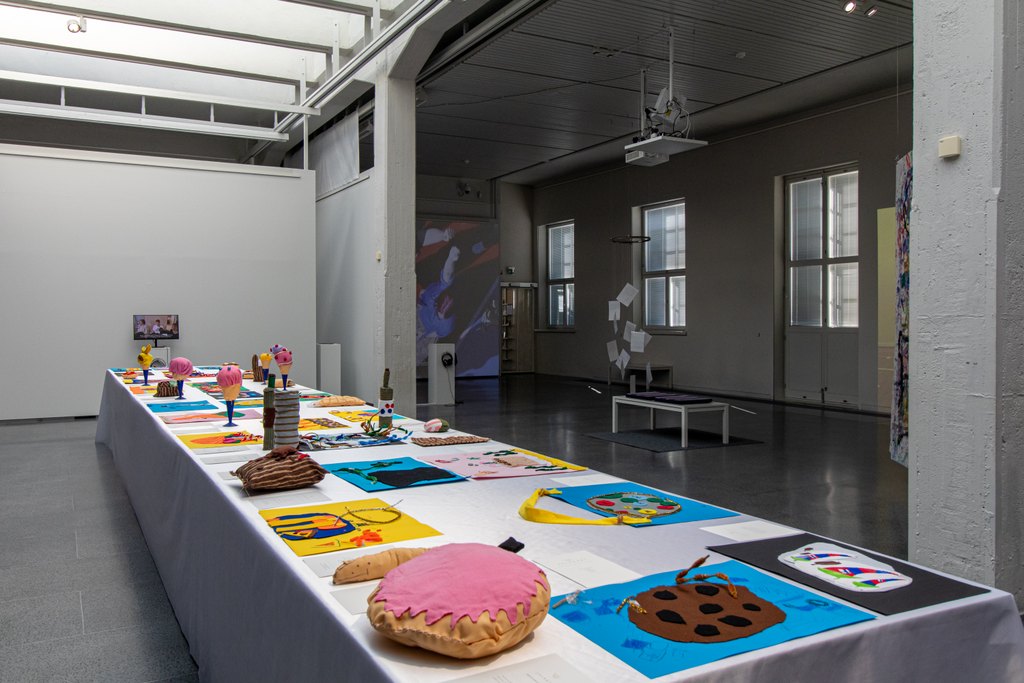
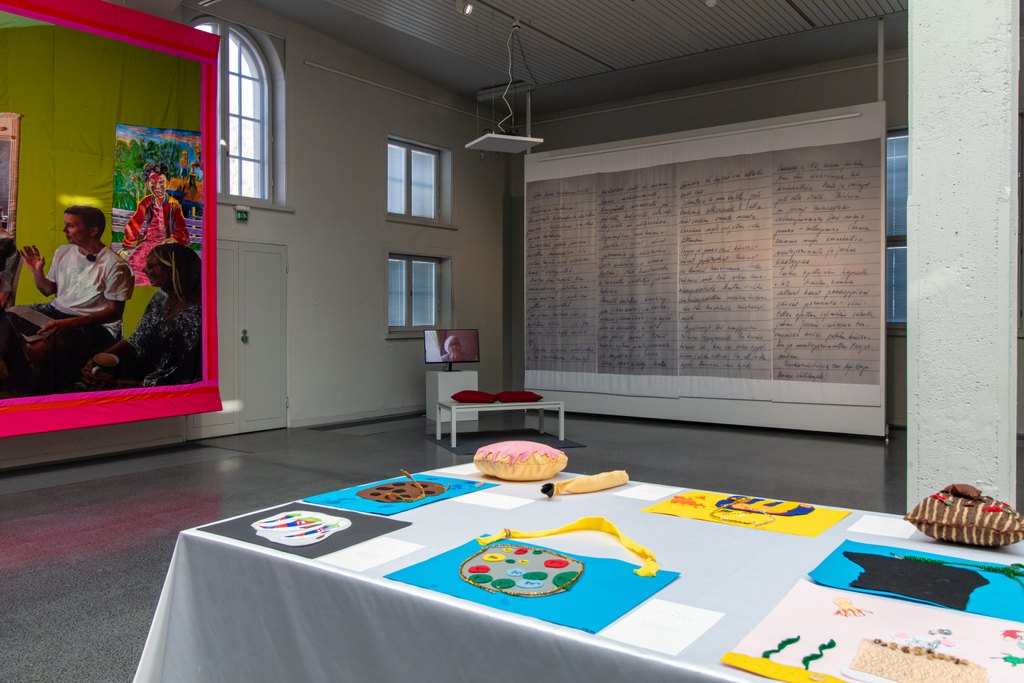
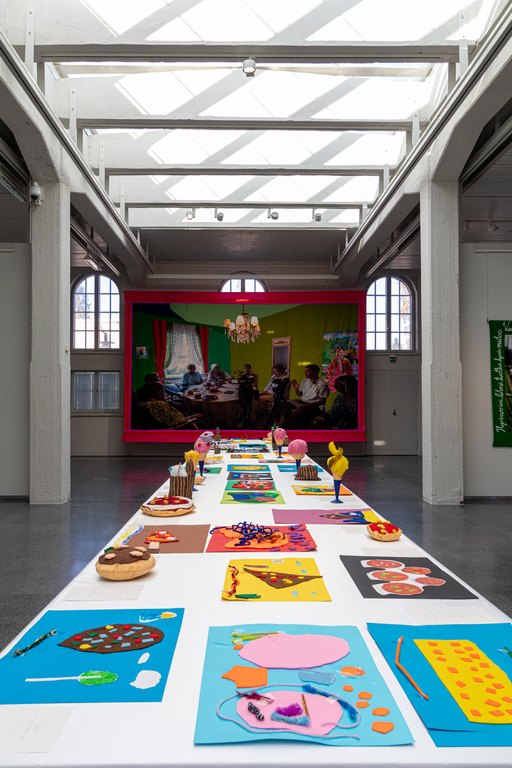
During the next days of the workshop, the children worked on transforming their sketches into full-fledged artworks. The younger participants, aged 6 to 9 years, created two-dimensional artworks on A3 cardboards using materials commonly found in school craft supplies such as paint, felt fabrics, craft braids, and beads. Meanwhile, the older children, aged 10 to 12 years, made three-dimensional stuffed soft sculptures using fabrics. Each child also wrote a short narrative to accompany their artwork and described the meaning behind it.

Photograph Fabio Cito 2022
Artwork:
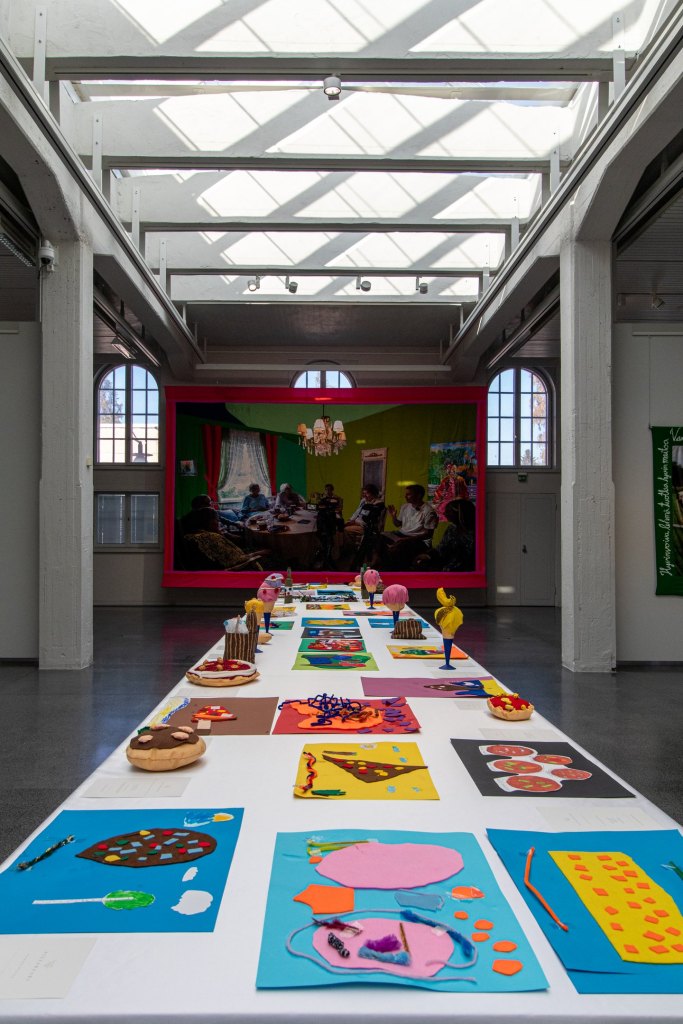
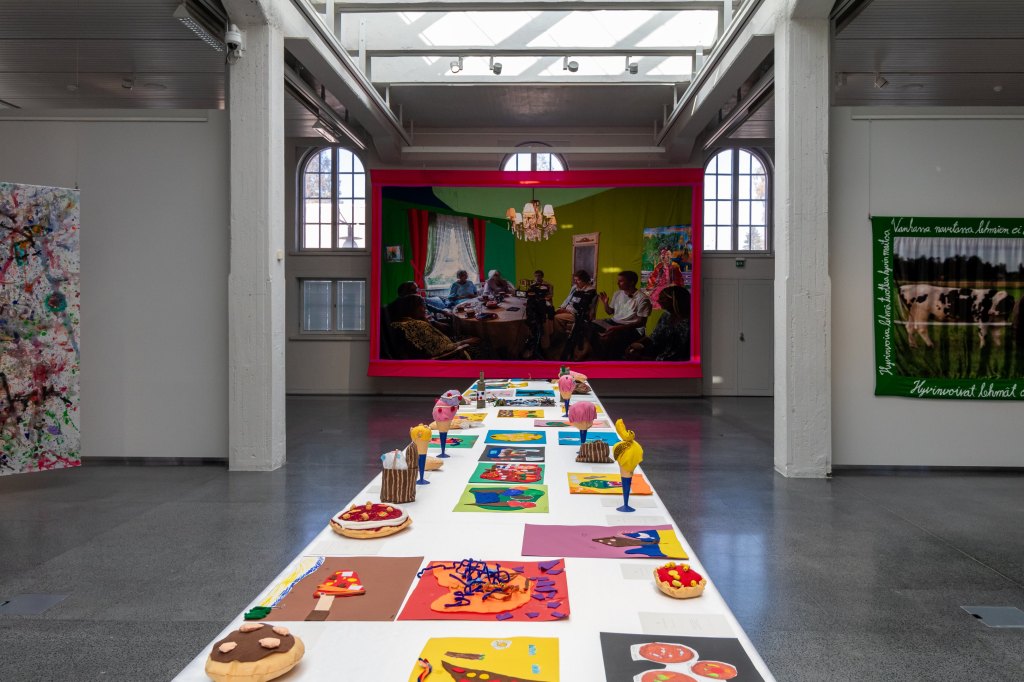
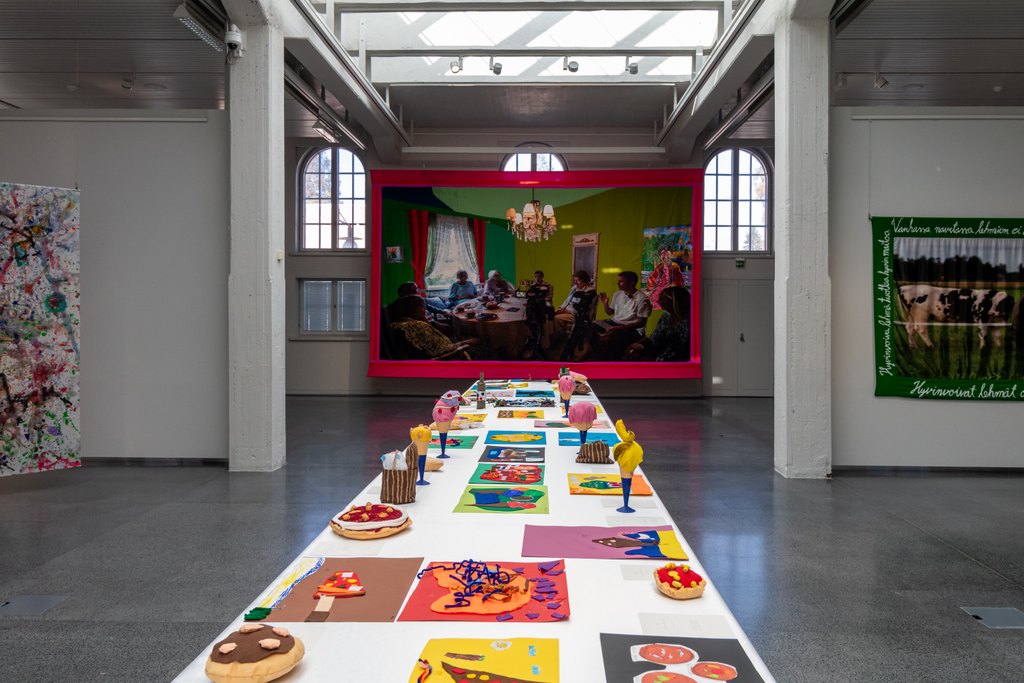
Artwork Title: “Dream Dinner Table” by Katja Juhola and Anu Hopia
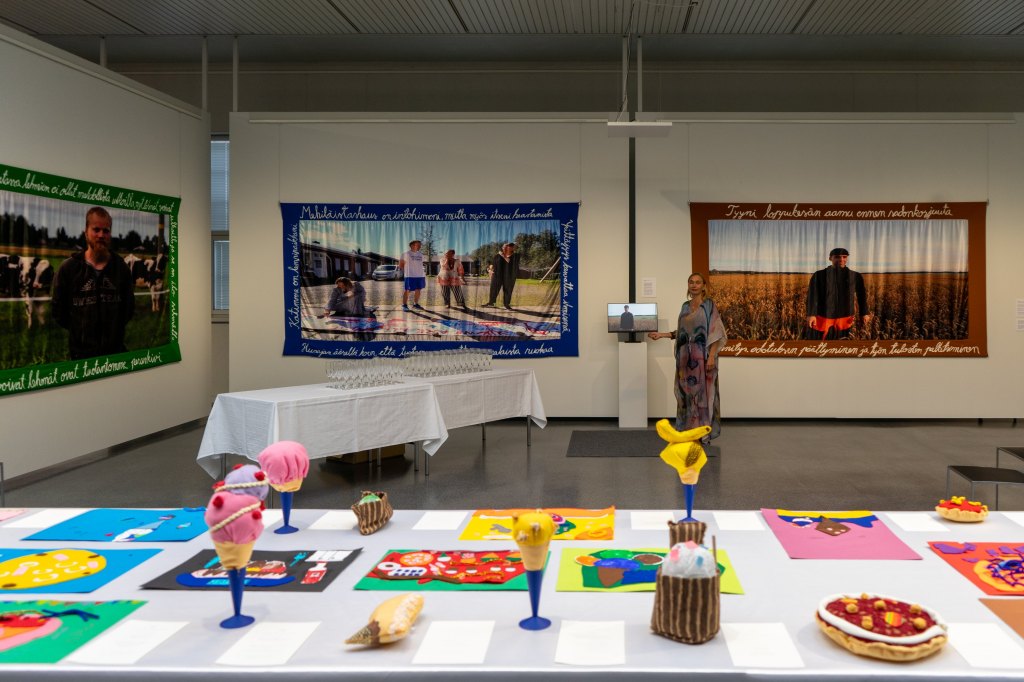
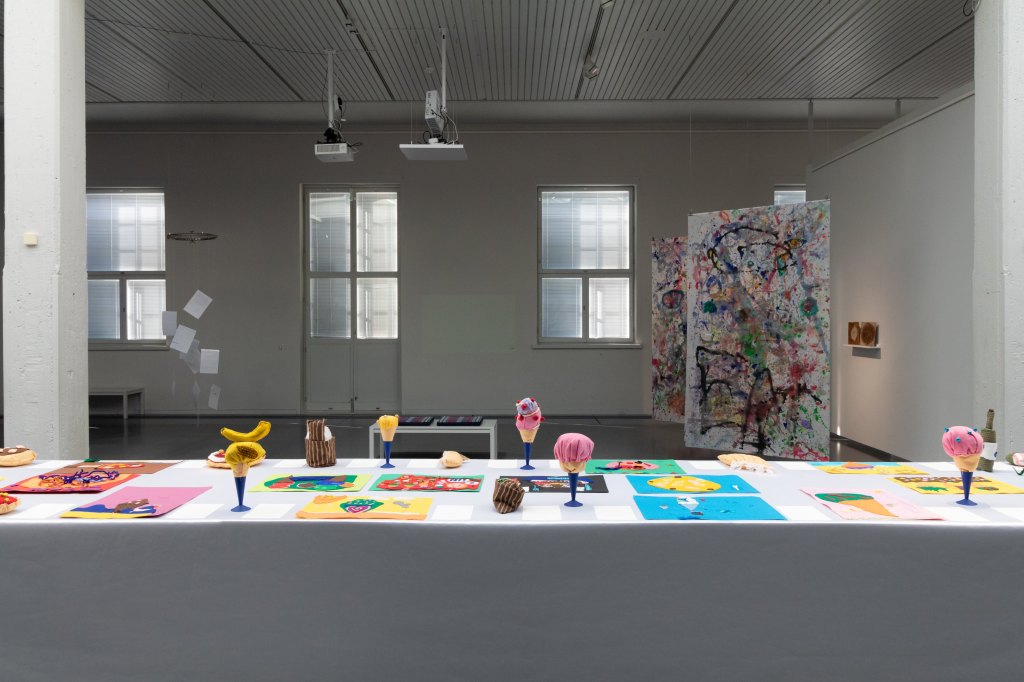
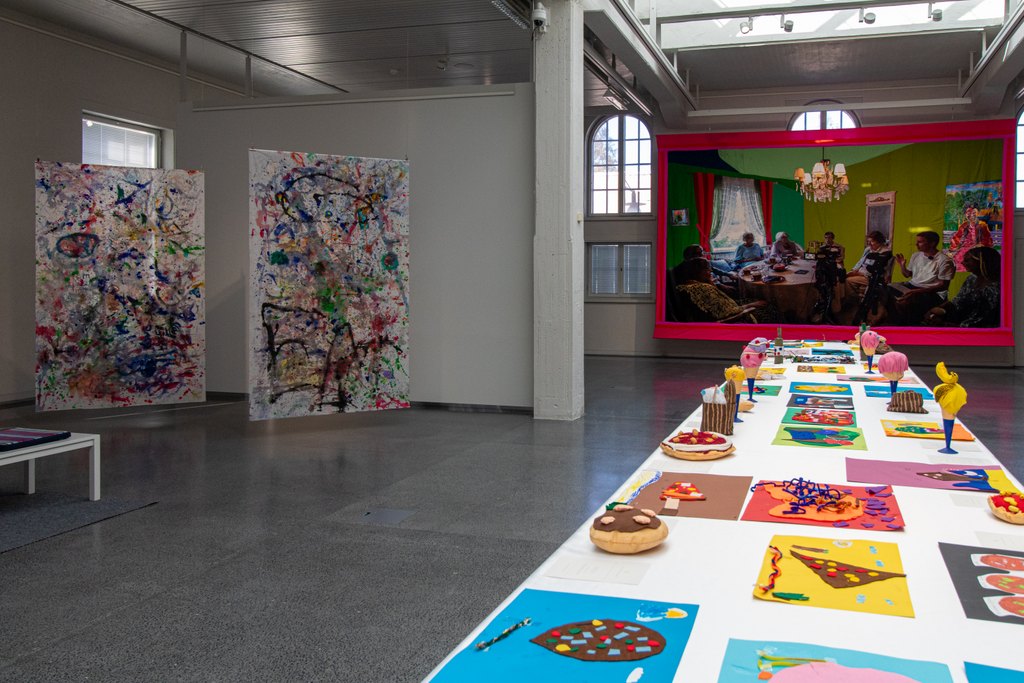
Katja Juhola and Anu Hopia, Dream Dinner Table, 2023, installation, drawings on paper and textiles, “menu cards” with stories of children’s own
The installation Dream Dinner Table was created by pupils from the elementary school at Tiistenjoki. Works of art that are related with food made out the point of departure for this installation. The children realized their ideas in workshops that were facilitated by Anu Hopia, Sonja Jokiranta, who is CEO for the company Luovuuden Lakeus (plains of creativity), Joan Marie Kelly who is an artist, and Arun Yadav, who is a training and well-being instructor and art student. These workshops took place in the rural village of Tiistenjoki at Lapua in 2022. Each of the pupils from the elementary school participated in these workshops. Process descriptions in the form of menu cards are integrated in the installation. These works of art are joyfully anarchistic and boundary pushing. Eternal connotations, associated with food and community, are popping up from the works. Health-effects and traceability are not forgotten, either. Happiness, delicacy, sharing, and parties are, however, the most prominent features.
Documentary video from Tiistenjoki Elementary School
(displays together with seinäjoki High school video)
Linus Westerlund & Katja Juhola 2023 24min 30sec
The base of the video is art-science collaboration, it shows how different disciplines of art and scientific knowledge melted into a four-day workshop about food. Children were using different kinds of arts-based methods to talk about food.
Seinäjoki High School
A three-day workshop conducted by a team of artists and a food ethics researcher addressed food ethics issues through various arts-based methods. The project involved 17 high school students in Seinäjoki and explored concepts of food availability, equity, sustainability, norms, and justice. The team, consisting of Raisa Foster, Hugo Peña, Teea Kortetmäki, and Clarice Zdanski, utilized diverse approaches such as body awareness tasks, movement-based practices, and drawing- and painting-related media to merge scientific knowledge with discussions on food values and ethics. These themes were discussed from the perspective of the students’ personal relationship with food and eating as well as from broader aspects of food production and justice.
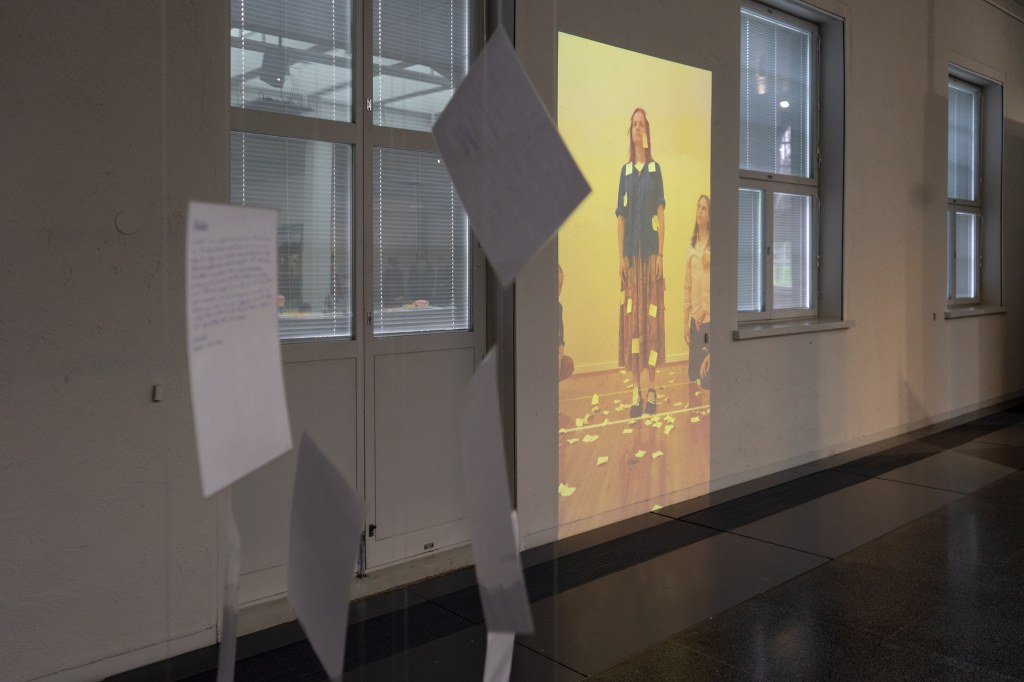
The project’s evolution was marked by intensive brainstorming and repeated revision of ideas. The first day began with movement-based exercises, engaging students to express their thoughts on food-related values. Visual arts and science played pivotal roles, with students engaging in drawing activities on tablecloths and philosophical reflections on food justice.
Day two introduced a station circuit where students rotated through different stations led by each team member. These stations included reflective writing, drawing, filming, and discussion sessions. Topics like societal norms, exclusion, and inclusion were addressed through these interactive activities.
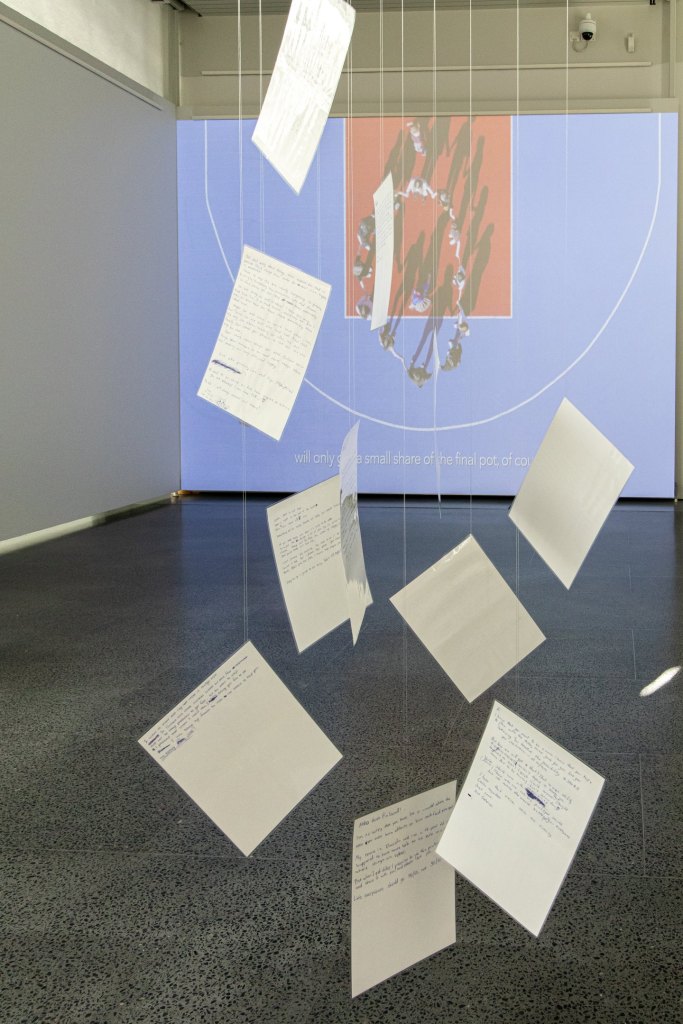
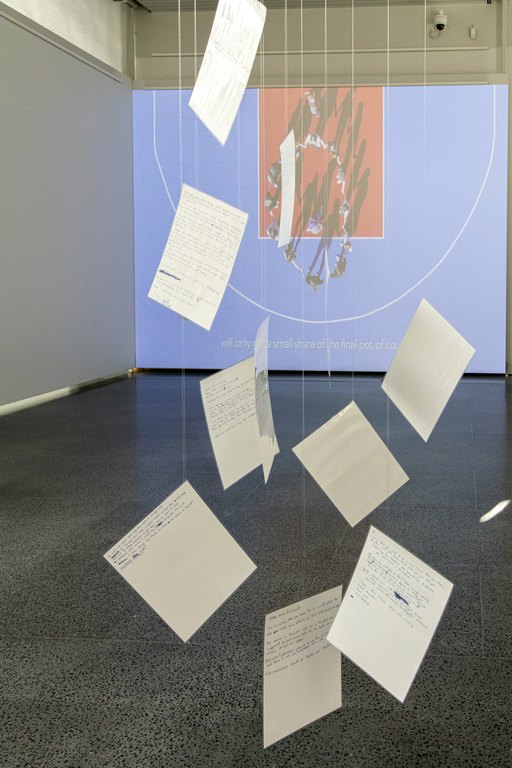
The final day featured outdoor performances to a camera that served as a culmination of the workshop and a production of material for the video artworks planned to be exhibited in Lapua Art Museum. In a nearby park, Chaos Painting, inspired by Post-World War II Action Painting, encouraged students to explore and express the chaos of emotions related to food through drawing- and painting-related media. On the park’s basketball court, an inclusion/exclusion game dramatized social inequality, while the final activity involved reflections and silence. At the end of the day, four voluntary students performed a scene to a video camera using phrases of personal recollections that all the students had written on post-it notes on the previous day. The filmed material was used in the video artworks for the exhibition.
Throughout the project, the team emphasized the fusion of art and science to foster discussions on food ethics and values. This collaborative approach encouraged participants to reflect on complex personal, societal, cultural, and environmental aspects related to food consumption, production, and justice. The team’s multidisciplinary efforts showcased the potential of arts-based methods to explore challenging topics and promote new perspectives and ways of thinking. The project highlighted the power of creative and versatile methods in community projects, bridging the gap between art and science for meaningful insights and change.

Photograph Fabio Cito 2022
In Hugo Peña’s workshop, the objective was to foster the creation of original graphic and visual material by each student, allowing them to freely express their ideas regarding food, exclusion, and inclusion. The workshop design involved incorporating the body as a means of expression, enabling students to convey their individuality and generate a personal discourse on the subject matter. One exercise required students to compose a concise letter directed to an ‘other’ individual belonging to the marginalized group. Subsequently, they were instructed to embody the written words through movement and capture these expressions using their mobile phones.
The underlying concept of this exercise aimed to encourage participants to establish connections beyond their familiar circles, thereby stimulating their imagination and cultivating empathy towards those considered marginalized. The outcomes of the exercise exhibited significant variation, potentially due to the complexity and information overload presented to adolescent students. Given more time, the results might have displayed greater consistency. Nevertheless, the responses varied, ranging from indifference to genuine emotional engagement. The physical activity component yielded diverse outcomes, with some students displaying limited mobility while others wholeheartedly engaged their bodies.
The exercise effectively stimulated participants’ imagination, evoked emotions and visible sentiments, and facilitated a connection with an imagined reality. It prompted students to pause and reflect on their privileged position within the contemporary world and encouraged them to consider how they could contribute to addressing instances of inequality. The workshop provided an opportunity to heighten awareness and instill a sense of restlessness, emphasizing the necessity of driving change.
Artworks of Hugo Peña:
Hugo Peña, Empatia, 2023. 11min 14sec Video.
Hugo Peña, My commitments, 2023. Installation.
Raisa Foster will have two video artworks:
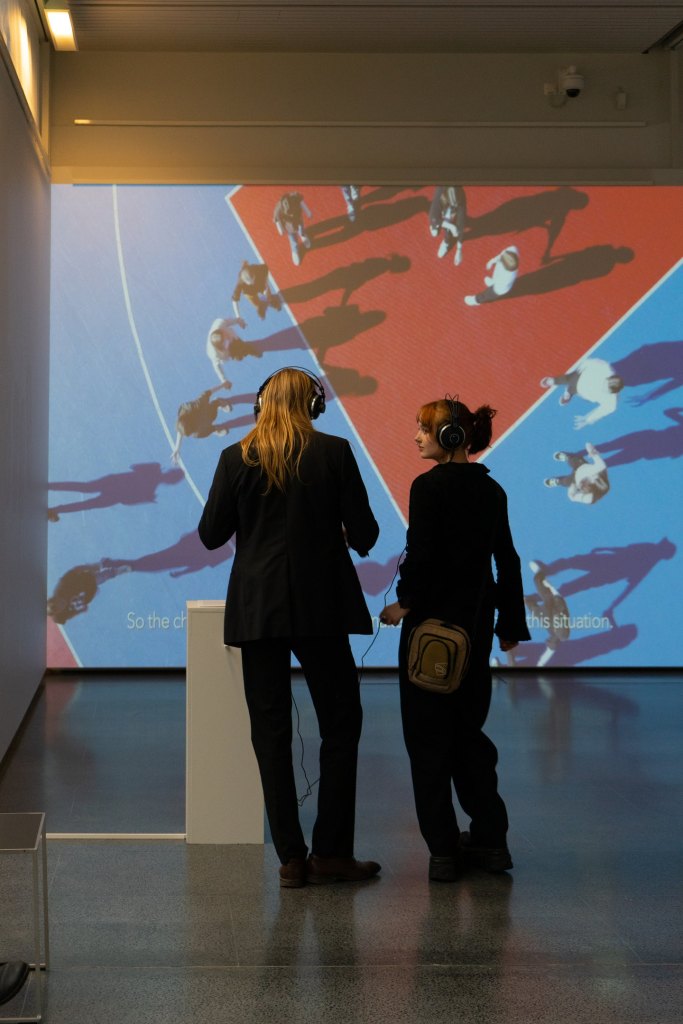
Finlandia Fair Food Games, single channel HD video, stereo, Finnish, 5 min 8 sec, 2023
Everyone can find facts about food production from numerous studies, but there is rarely enough time and interest to read and interpret them. In contrast, space has been cleared in the media and general discussion for sport – its concept and vocabulary are familiar to everyone. Sports are taken seriously, and various game and winning strategies are commented on with great interest. The Finlandia Fair Food Games video piece encourages viewers to interpret the global field of fair food production: Who is playing on the same side? Who are the key players, and who are on the sidelines? Could the whole food production chain, instead of the players blaming each other, find a common goal to move towards more socially and ecologically sustainable solutions? The piece was realized together with the students of Seinäjoki High School and is based on Teea Kortetmäki’s text about food justice.
Koska meitä käsketään (Because we are told so), single channel HD video, stereo, Finnish, 4 min 8 sec, 2023
Food is a culturally significant part of people’s lives, history, and traditions. Thoughts and values related to food and eating build both personal and collective identity. Beliefs related to food can also affect a person’s self-image – constant remarks, expectations, encouragements, and warnings shape the thought patterns and habits of children, young people, and adults alike. The Because We Are Told To video work encourages viewers to think about their relationship with food and eating and where their beliefs, values, and customs come from. The piece was created in collaboration with the students of Seinäjoki high school.

Photograph Fabio Cito 2022
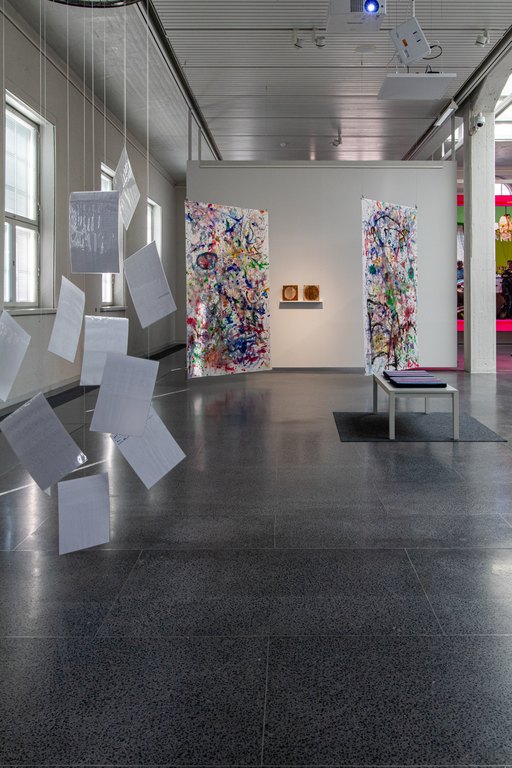
Clarice Zdanski created The Chaos Painting workshop, drawing inspiration from the pioneers of performance art, specifically the Action Painting movement that spanned from the 1940s to the 1960s. In this style of painting, the artist’s movements serve as brushstrokes, resulting in spontaneous drips, spots, splatters, and smears of paint. The emphasis lies on the act of creation rather than solely the final product, aligning perfectly with the vision of the ISEAS team. The workshop’s name, ‘Chaos Painting,’ stems from the Chaos Dance event that took place on the first day of the Seinäjoki High School workshop.
Chaos Painting entails layering images, colours, words, collaged-in images, scribbles, and splotches to capture the chaotic array of emotions individuals experience when considering how to nourish themselves in a manner that respects their bodies, fellow humans, all creatures, and the environment. On the second day of the workshop, the objective was to cover the tablecloths as chaotically as possible using various art materials such as oil pastels, chalk, coloured pencils, image transfers, acrylic paint, and collage. The transparency of the nonwoven tablecloth enabled the students to work on both sides, further enriching the complexity of their thoughts and feelings.
From a distance, the paintings may appear as a seemingly haphazard amalgamation. However, closer inspection reveals the unique individual perspectives embedded within the intricate details. Adopting a ‘one thing leads to another’ approach, Clarice realized that illuminating the finished paintings in a location where light could pass through the fabric would expose the dense overlapping of multiple layers. This installation choice aims to confront viewers with the deep-rooted psychological and emotional issues associated with food and nutrition, as well as evoke strong empathetic emotions regarding food justice on a global scale.
Lapua book club members -team
Socially engaged artwork was a collaboration with six elderly women ranging in age from 73 to 96 years old from the Lapua book club, alongside Finnish artist Teemu Mäki, Iranian artist Mahmoud Mohammed, and Finnish environmental anxiety researcher Panu Pihkala and Katja Juhola. The project aimed to spark conversations about food and environmental issues through art. For elderly people, food has a special place in their hearts and minds, representing childhood, heritage, and family traditions. Conversations about food memories and poems were used as arts-based methods to understand their relationship with food and how it has shaped their lives. The project also addressed environmental changes in their lifetime and their positive and negative effects.
As a preliminary task, the team asked the book club members to choose their favourite poem about food or environmental issues. Mäki discusses the effect of poetry on people’s identity, emotions, and imagination, among other things. He also examines the social role of poetry and its importance in, for example, political and social activities.
After the poems, Juhola invited book club members to discuss the food memories that the participants had from their own childhood in Finland in the 30s and also during the Second World War. The reminiscence started with one participant telling about the morning of her childhood, which was accompanied by the smell of cows brought from the barn by her mother, a heavy porcelain jug of milk and a gruel eaten at that time. The memory was also accompanied by the crackling of the fire in the kitchen. This first memory opened a gate where different memories brought by the senses feed each other, when one person stops, the next is already tempted to continue.
Food is a powerful tool that connects elderly people to their past and present. Memories especially food memories play an important role in how we perceive food. They are often linked to many senses and emotions and can be triggered by smells, tastes, sounds or even colour.
Artworks:
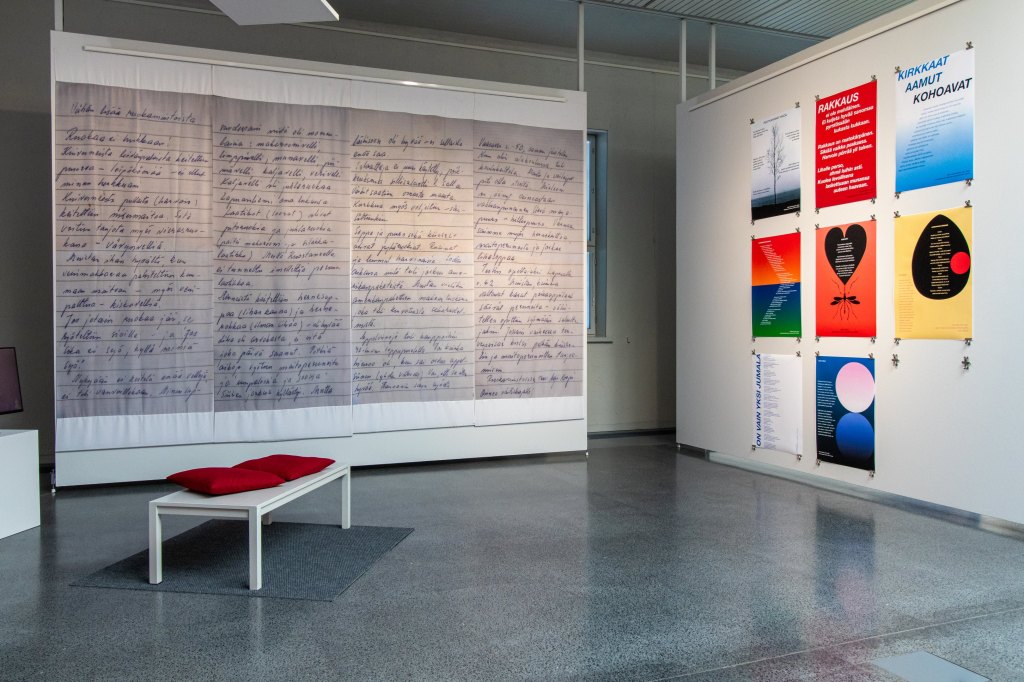
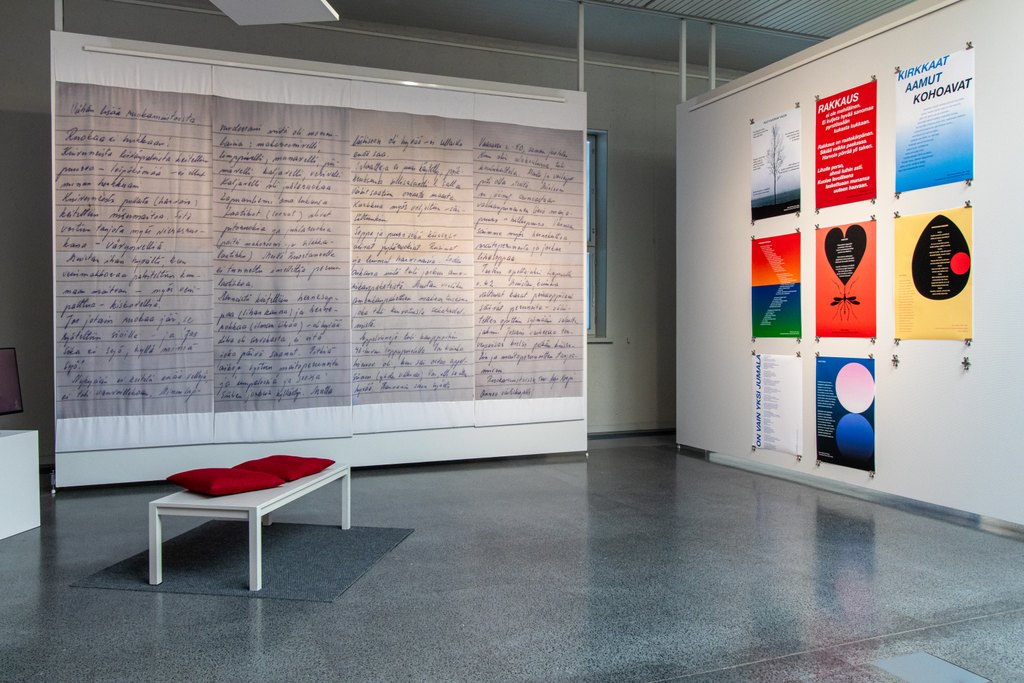
POETRY POSTERS
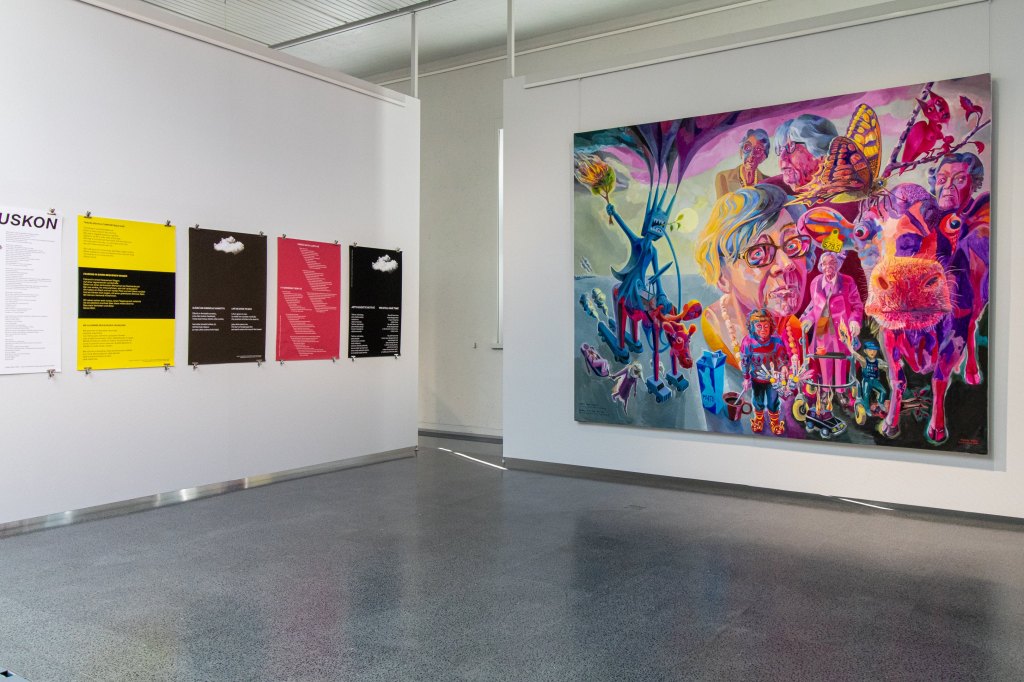
Poetry posters, made by Teemu Mäki:
Birgit Ahokas: Untitled (Anneli Ammeskanka’s favorite)
Lauri Pohjanpää: Hares (Anneli Ammeskanka’s favorite)
Immi Hellén: Morning coffee and Mother is baking (Kerttu Rantala’s favourites)
Eino Leino: Nocturne (Maija Korve’s favorite)
Kirsi Kunnas: Trees carry light (Sirkka-Liisa Sievänen’s favorite)
Eeva-Liisa Manner: Bright mornings rise (Sirkka-Liisa Sievänen’s favorite)
Teemu Mäki: Love
Teemu Mäki: There is only one God
Katri Vala: The distant garden (Katja Juhola’s favorite)
Bertolt Brecht: Traveling in a Comfortable Car / Fahrend in einem bequemen Wagen (Teemu’s favorite)
Teemu Mäki: You still have time / You still have time
Teemu Mäki: It’s Snowing Today / It’s Snowing Today
Teemu Mäki: I believe
Pentti Saarikoski: Life is given to man (Teemu’s favorite)
“When Katja told me last year that she had recruited a reading circle from Lapua as one of the project partners, I suggested that one form of cooperation could be that I would ask them to name their favorite poems and at our meeting I would read their favorite poems aloud to them, after which we would discuss them. Since I’m also a writer and a self-absorbed fool, I wanted to — somehow — read them a couple of my own poems as well. That’s what we did. For the exhibition, I made poster versions of their favourite poems, my own favourite poems and a few of my own poems.
This part is connected to the food theme of the exhibition by the donkey or cow bridge, that literature is food for the soul, so in a way it is also food. Another connection is that many of these poems deal with nature or the relationship between man and nature. One of our common paradoxes is that the majority of Finns’ favourite poems focus specifically on the admiration of nature, praising nature’s magical beauty and superiority — and yet Finns, with their own voting and consumption choices, are constantly practically destroying and torturing the nature they worship in principle. This does not mean that Finns’ love for nature is a lie, but that our love for cheap meat, cheap energy and consumer goods is perhaps even greater. But we can still change.”
Teemu Mäki
On the train on the way from Kuopio to Helsinki, 16 September 2023.
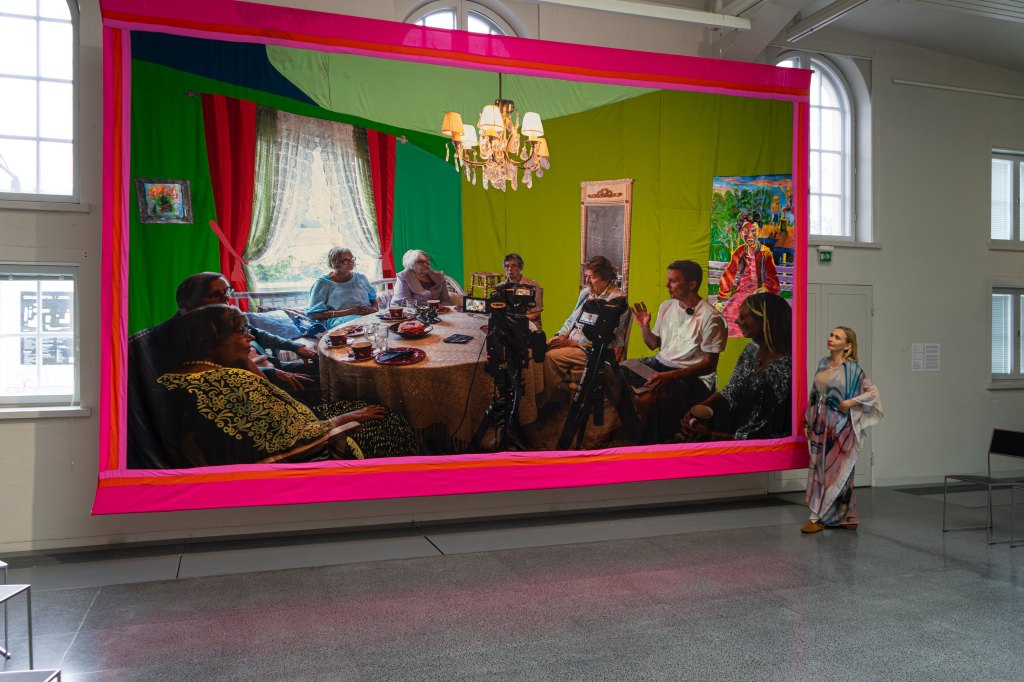
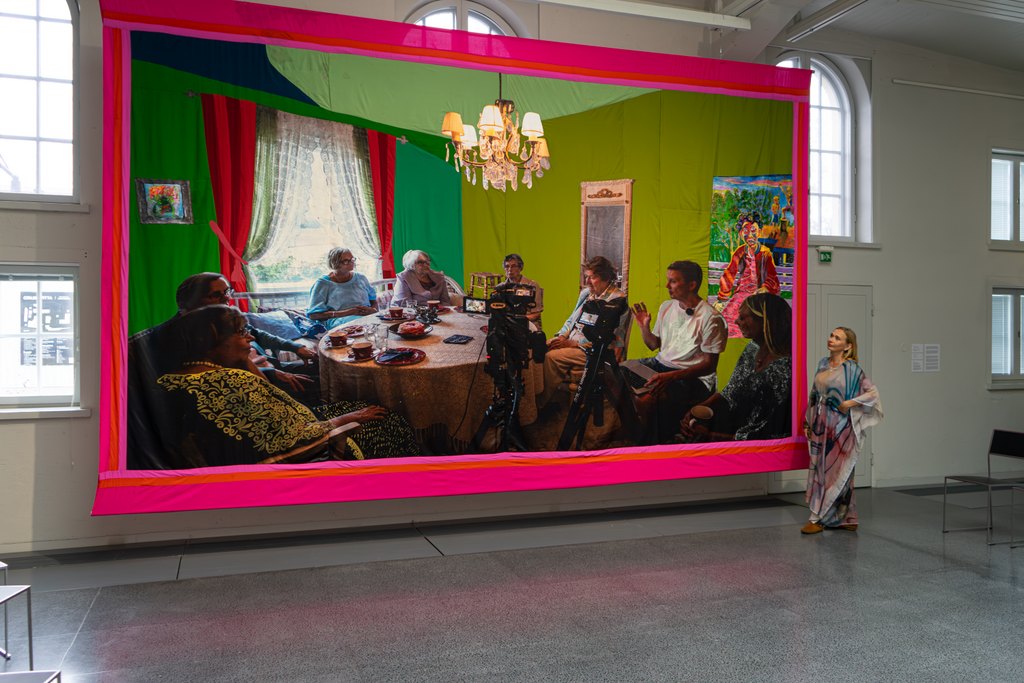
Katja Juhola,T he Lapua Book Club Madams, 2023. Mixed media on canvas: photograph, appliqué, colour pigment, and acrylic
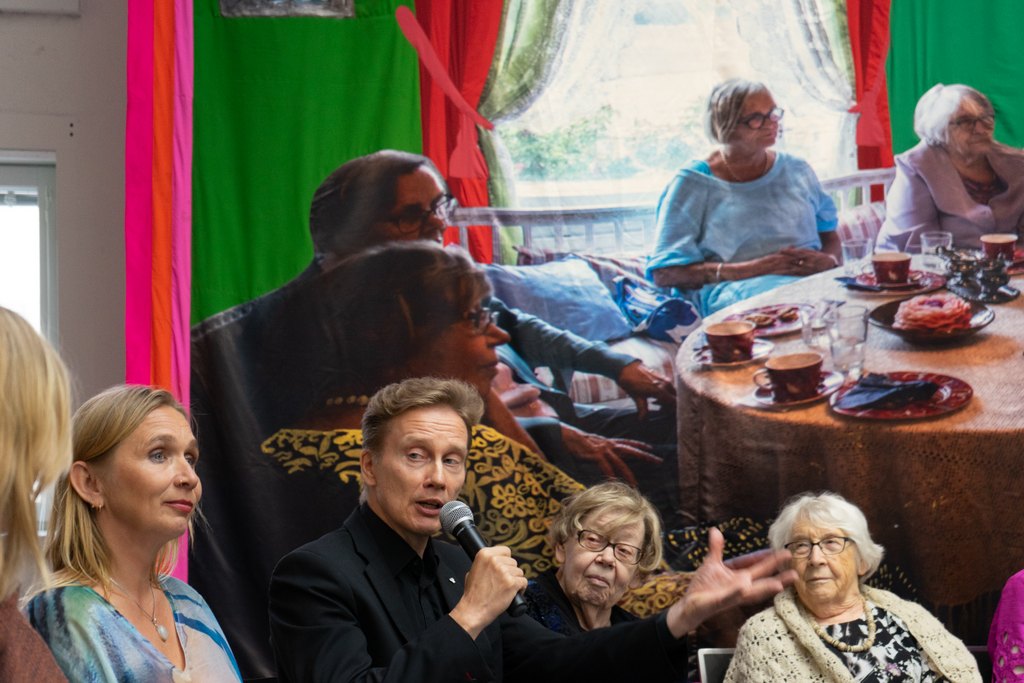
The work of art the Lapua Book Club Madams is based on a photograph by Fabio Cito presenting the members of the book club at Lapua. The participants are sitting around a coffee table in the summer of 2022, having a chat with the ISEAS team. Their topics were related to poems with food and nature thematic, how childhood was like in conditions of war, and how the environment has been changing during the members’ lifetime. Those participating from the ISEAS team are Katja Juhola, Teemu Mäki, Iranian Mahmoud Mohammadi, researcher Panu Pihkala, photographer from the documentation team Fabio Cito, and videographer Linus Westerlund.
Video, Katja Juhola & Teemu Mäki, Muistot / Memories 16min, 50 sec 2023
Movie has been filmed by Linus Westerlund and edited by Katja Juhola and Linus Westerlund. It is based on the food memories of elderly ladies from the Lapua.
Katja Juhola, Food memories from the past, 2023
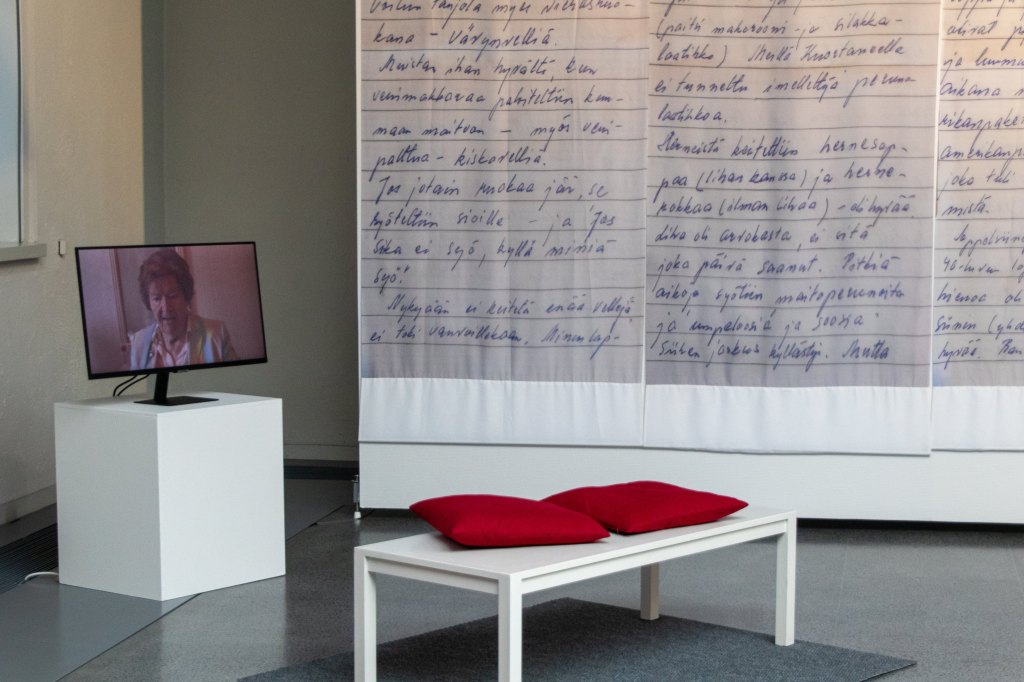
The canvas displays images of a handwritten letter sent to Katja Juhola by Mrs. Maija Korpi, a member of the Lapua National Seniors’ Literary Circle. In this letter, Korpi reminisces about the past and her food-related memories. Through this artwork, as well as the accompanying film ‘Memories,’ the exhibition spans a temporal journey of over 150 years. It not only bridges the gap between the past and future but also maintains a significant presence in the Anthropocene era.
Teemu Mäki, Grannies in the Midst of It All
(Hey, teachers of my youth, how how did it come to this?)
Oil on canvasAugust-September 2023
“In the middle of my painting are portraits of a few old people and one child. In addition to them, the board has, among other things, one big monster and an even bigger cow. People are in between, in the middle of everything.
The monster rides a creature that is both a pregnant woman and a cow. The monster has enslaved this creature, even though it grew out of it itself and is still attached to it. The monster draws life force from the breasts of the creature it enslaves. Four chimneys grow from the monster’s head, the pollution they cause darkens the sky. The monster rides with a sense of its power, brandishing a burning hardwood in its hand like a sword.
The cow on the right side of the painting is staring at the viewer, as are some of the people in the painting. The cow is a human creation, just like the aforementioned monster.
Man himself has created the monster in the name of exploitation of nature and progress, and even though man now knows that he has caused the sixth wave of mass extinction and climate change and knows that he is also quickly destroying the chances of survival of his own species, man neither knows nor wants to stop the monster.
Man has also created the cow, bred a creature from a wild animal, from which man gets milk and meat. For the last century, the number of cattle has grown at the same rate as the human population. Some of the cattle are happy. A person knows how to treat them well if they want to, whether they are dairy cattle or meat cattle. From a biological point of view, there is not a very essential difference between me and the cow: both are sentient and thinking large-skinned mammals. However, the number of cattle is a problem in itself because human consumption of meat, especially the consumption of beef and dairy products, is one of the most important causes of climate change and the eco-crisis.
We all know this. Or we should know. When I painted the portrait portions of the board, I tried somewhat to embody this confusion. The main thing in the portrait sessions was still to portray my model in the same way as I always try to in portraits: show what people are really like, without beautifying, and try to show their diversity — no person is just one, but many characters, many tendencies and potentials, both good and bad. And portray all people as lovable.
Last summer, when I met the members of a reading circle in Lapua, I was surprised and delighted that most of them were my former teachers from middle school or high school. I have nothing but good memories of them. During our meeting, we went through each other’s favorite poems and talked about food and the memories associated with it. It was rewarding, at least for me. After the meeting, an unfair question came to my mind: “How did this happen? Finland has one of the best schools in the world and you were really good teachers. Why did we still fail so badly?” It’s not their fault, of course, but all of us.
I also painted one of my children in the lower part of the painting, from when he was about ten years old. He is holding in his hand a space robot that he built out of Lego blocks, that he invented himself. There’s no telling what our children will become, whether they’ll blend in with the chimney-headed monster or join the resistance.
You also can’t know how other species will treat us in the future, if there will ever be a revolution of animals or artificial intelligence, after which it will be our turn to be meat cattle or fuel, or if a bird like the one I put in the upper right corner of the painting will appear somewhere to protect and nurse a human child.”
Teemu Mäki On the train on the way from Kuopio to Helsinki, 16 September 2023.
Farmers team
The team include artists Teemu Mäki, Mahmoud Mohammadi, and Katja Juhola, accompanied by the active involvement of Raisa Foster during the farm visits as well as Anu Hopia and Teea Kortetmäki while meeting farmers in artist residency.
Five young farmers from the region were invited to discuss the artist residency with artists and food scientists: meat and cattle producers, a dairy farm, a beekeeper, and two grain and potato producers. The discussion focused on agricultural policy and its complex connection to the prevailing climate crisis. The farmers gathered at the artist residency and engaged in thought-provoking discussions with artists and scientists about food production amidst the urgent climate crisis. Linus Westerlund videotaped the entire conversation, which lasted several hours.
In the following days, the artist team visited three different farms, e.g., Johannes Sipilä’s grain farm, Hannele Suvanto’s bee farm, and Kalle Fält’s milk and meat farm.

Photograph Fabio Cito 2022

Photograph Fabio Cito 2022

Photograph Fabio Cito 2022
Katja Juhola, Meeting the Field 2023 4min 26sec
Katja Juhola led a performative sensory exercise for her fellow artists and a local farmer, with the purpose of deepening their understanding of the world around them, including the countryside and the broader environment. The work utilized the senses to attune to the environment and foster presence. Often, farmers work in the field inside their tractors while listening to music through headphones. Through this exercise, the objective was to connect everyone, both artists and farmers, to the land where our food grows. We are all part of one network, and every action we take has an impact
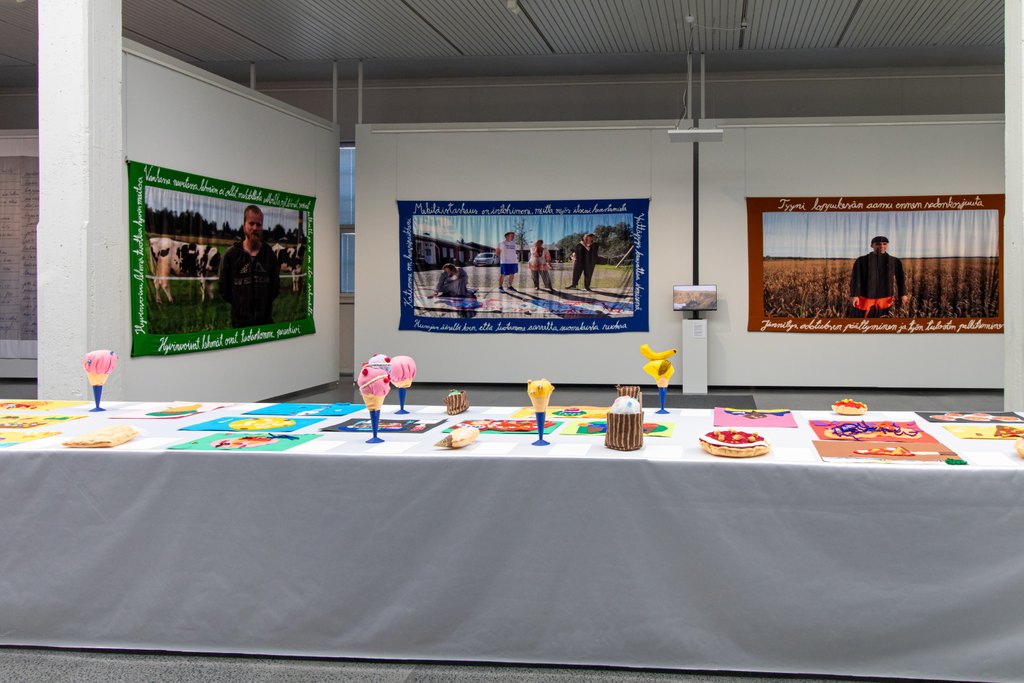
Katja Juhola, Favourite Places 1–3, 2023. Mixed media on canvas: photography and acrylic
In August 2022, leader of the ISEAS project Katja Juhola asked three South Ostrobothnian farmers to show her, which places were their favourites at their farms. In addition to this, the farmers wrote down, why they had chosen those particular places. The photographs were taken by Fabio Cito, who acted as the photographer of the ISEAS symposium. The hand-painted texts of the works were sent to Juhola by the farmers. Juhola has copied them word for word, except for Hannele Suvanto’s text, she has been allowed to shorten it a bit with permission.
• Winter wheat field. The favourite place of Johannes Sipilä.
Nature itself and closeness to nature mean a lot for Johannes.
• Home yard. The favourite place of Hannele Suvanto, who is a beekeeper.
Home and family are lift up by Hannele as the essence in her entrepreneurship.
• Cow pasture. Kalle Fält runs a dairy farm, and the pasture is his favourite place.
The well-being of his animals is vital for Kalle.
.
Winter wheat field is grain farmer Johannes Sipilä’s favourite place. For Johannes, nature and its proximity are important.
The homeyard is the beekeeper’s Hannele Suvanto’s favorite place. For Hannele, home and family become the centre of entrepreneurship.
The favourite place of Kalle Fält, a dairy farmer, is a cow pasture. The welfare of the animals on his farm is important to Kalle.
MOVIES
Teemu Mäki
Ecological Bulletin
Video. 6 min 30 p. 2023
Teemu Mäki
Ostrobothnian Cows
Video. 5 minutes 2023
Teemu Mäki & Katja Juhola
Farming Conversations
Video. 27 min 20 p. 2023
“Katja organized a meeting where artists and researchers had the opportunity to talk with farmers and ranchers from Southern Pohja. The conversations were recorded and I made a half-hour documentary out of them.
I made two short films for Friends, one of which is, as the name suggests, an information attack, in which I go through the human-caused eco-crisis and future prospects with the help of statistical facts and numbers.
One of the short films is wordless. It features the healthy and happy cows we photographed in the barn and in the pasture.
Both shorts have almost only music on the soundtrack. I even put some music into the interview document. This is typical for me: when I make works with a lot of documentary material, works that are in some respects very close to journalism, academic research or information attacks, I still tend to put in the same work also material that escapes verbalization or that cannot be replaced with words… … it must have more than verbal, conscious reasoning. We are much more, whether we like it or not.
That’s why these three documentaries also have music, which is meant to be as important a part of the content of the works as interviews or statistical facts.
One more note about the use of music. One part of my artistic method is that when I use music in my films or in the shows I direct, I always follow two principles:
1. There must be no talking during the music. (Music should never be subordinated only to the background of dialogue.)
2. If music is used, the song must be played in its entirety — only fragments of it must not be used. Sometimes this means that the song is played in its entirety during the performance, but for example in three parts 🙂
These three films feature solo piano pieces composed by Robert Schumann (1810–1856) and Domenico Scarlatti (1685–1757). The pianist is Clara Haskil (1895–1960). Haskil is one of my role models and my endless source of joy. I recommend getting familiar with his recordings. His unsentimental, clinically precise and pedal-free style was based (in my opinion) on the fact that he knew how to boldly structure the tonal language of his favorite composers Mozart, Schumann and Scarlatti so that each phrase gets a task and the meaning of the structure of the composition is revealed.”
Teemu Mäki
On the train on the way from Kuopio to Helsinki, 16 September 2023.
The exhibition as part of my dissertation
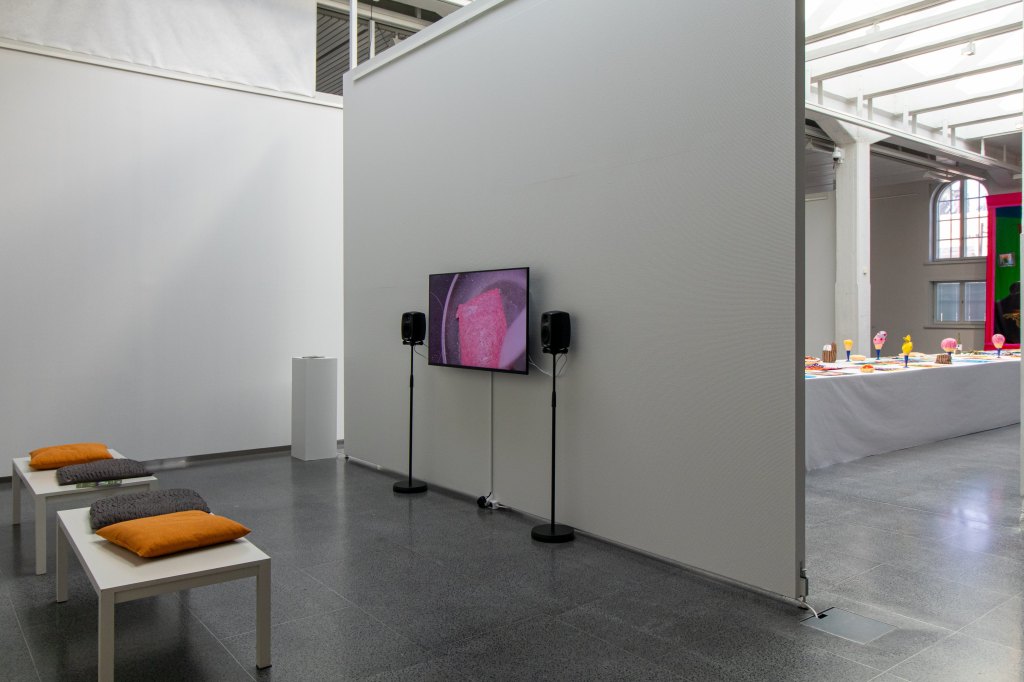
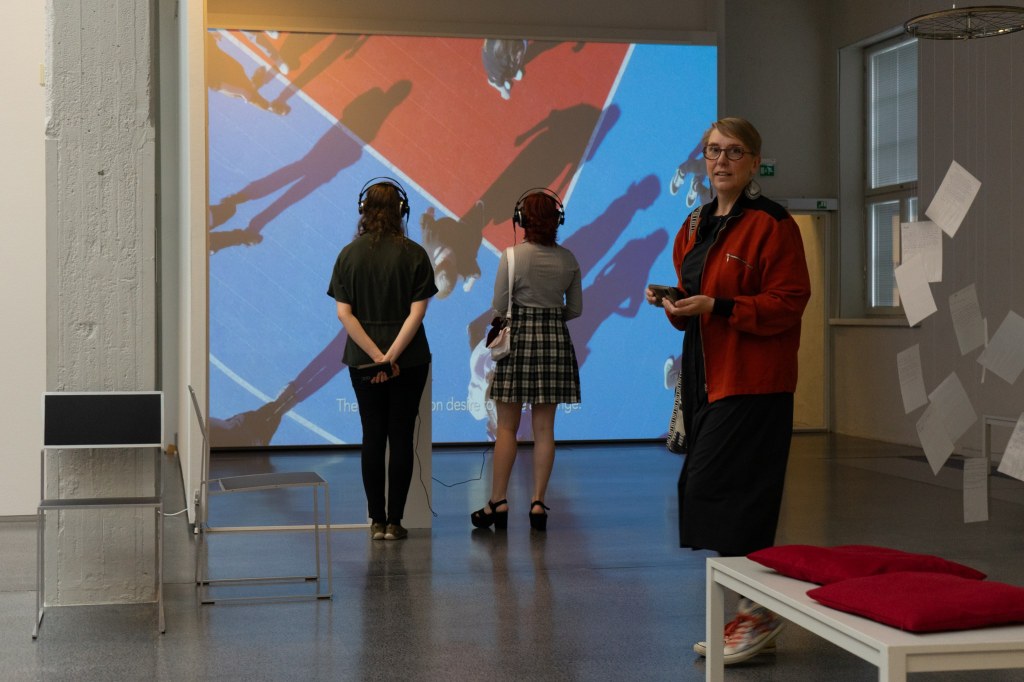
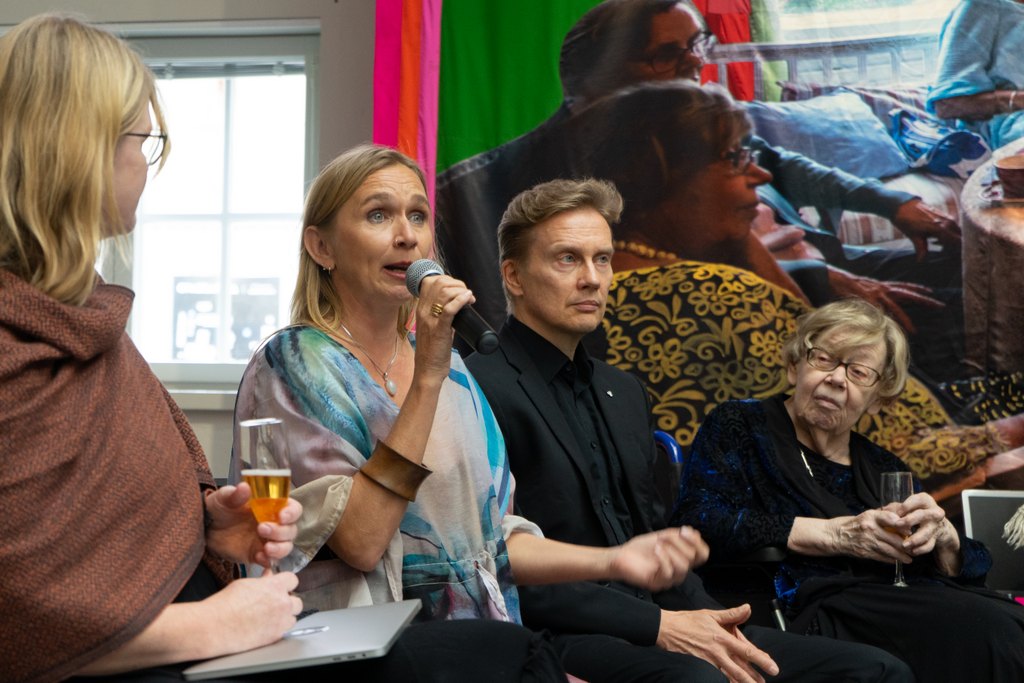
When designing the works in the exhibition, Juhola wanted to be aware of each artist’s ideas for planned artworks. As a curator, she wanted the works to be honest artistic studies of the socially engaged collaborative art experience. The works intended to highlight the collaboration between art and science—the result of activities produced using arts-based and conversational art methods. At the heart of Juhola’s research is the development of ISEAS by using conversational art methods. The exhibition highlights Juhola’s curatorial goals in socially engaged art and her anthropogenic perspective through arts-based means. At the same time, the exhibition answered Juhola’s research question about fruitful collaboration between art and science by giving exhibition visitors a broader understanding of the importance of environmentally conscious agency. The aim of the exhibition is to highlight the diverse dimensions of conversational art through the works of both individual artists and groups of artists. The exhibition aims to show how arts-based work can expand the expression of conversational art in the form of socially engaged art.
Photos by Anna-kaarina Perko 2023









References
Bourriaud, N., Pleasance, S., Woods, F., & Copeland, M. (2002). Relational aesthetics. Les Presses du Réel.
Demos, T. J. (2016). Decolonizing nature: Contemporary art and the politics of ecology. Sternberg Press.
Demos, T. J. (2017). Against the Anthropocene: Visual culture and environment today. Sternberg Press.
Dewey, J. (2005). Art as experience. Penguin.
Gablik, S. (1995). Conversations before the end of time. Thames and Hudson.
Haapalainen, R. (2018). Utopioiden arkipäivää: Osallistumisen ja muutoksen paikkoja nykytaiteessa 1980–2011.
Haapalainen, R. (2018). Lectio Precursoria: Everyday life of utopias. SYNNYT/ORIGINS, 2018(1), 56-64.
Irish, S., & Lacy, S. (2010). Suzanne Lacy: Spaces between. University of Minnesota Press.
Juhola, K. (Ed.) (2018). ISEAS Finland 2017 International Socially Engaged Art Symposium. Scholars’ Press.
Juhola, K. (2019). Curating participatory art in the time of Anthropocene. Design & Art Papers, 7(1), 27–44. Eurostampa.
Juhola, K. (2021). Ylisukupolvisia kohtaamisia: Kuinka kiertotaloustyöpaja leikittää [Intergenerational encounters: How the circular economy workshop plays]. In M. Huhmarniemi, S. Wallenius-Korkalo, & T. Jokela (Eds.), Dialogista vaikuttamista—Yhteisöllistä taidekasvatusta pohjoisessa. [Dialogue Influence — Community Art Education in the North].pp.102-114. University of Lapland.
Juhola, K., & Moldovan, S. (2020). International art symposium in focus on educational places and power relations. Research in Art and Education, special issue.
Juhola, K., Huhmarniemi, M., & Raatikainen, K. (2020). Artistic research on socially and environmentally engaged art—Ethics of gathering. Ruukku: Studies in Artistic Research, 14 (special issue: Ecologies of practice). https://doi.org/10.22501/ruu.696352
Kantonen, L.(2005): Teltta. Kohtaamisia nuorten taidetyöpajoissa. Taideteollisen korkeakoulunjulkaisu A 54. Helsinki: Like ja Taideteollinen korkeakoulu.
Kester, G. H. (2004). Conversation pieces: Community and communication in modern art. University of California Press.
Lacy, S. (2010). Leaving art: Writings on performance, politics, and publics, 1974–2007. Duke University Press.
Matarasso, F. (2019). A restless art. How participation won, and why it matters. Calouste Gulbenkian Foundation.
Morton, T. (2016). Dark ecology: For a logic of future coexistence. Columbia University Press.
Pihkala, P. (2017). Päin helvettiä. Ympäristöahdistus ja toivo. [Damn it. Environmental anxiety and hope.]. Helsinki: Kirjapaja.
Sánchez, C. V. (2020). Rhythm ’n’ Dewey: An adverbialist ontology of art. New Ontologies of Art, 79.
Wochenklausur. (n.d.). Wochenklausur. Retrieved from http://urban-matters.org/projects/wochenklausur/
 iseasfinland
